Choosing the right legal structure is a crucial step when starting or expanding a business. The structure you select determines how your business is managed, how much compliance is required, how easily you can raise funds, and how your business can grow in the future. In India, Limited Liability Partnership (LLP) and Private Limited Company are two widely preferred options for entrepreneurs.
Both structures provide limited liability protection and a separate legal identity, but they have different features and advantages. Understanding the LLP vs Private Limited Company comparison can help business owners select the option that best fits their goals.
Understanding LLP
A Limited Liability Partnership (LLP) is a business structure that combines the benefits of a partnership firm with the protection of limited liability. It is regulated under the Limited Liability Partnership Act, 2008.
In an LLP, partners have the freedom to manage business operations according to their agreement while keeping their personal assets protected from business obligations.
LLPs are commonly chosen by professionals, consultants, small businesses, and service providers because they offer flexibility and fewer compliance requirements.
Features of an LLP
Separate Legal Identity
An LLP has its own legal identity separate from its partners. It can own assets, enter contracts, and take legal action in its own name.
Limited Liability Protection
The personal assets of partners are generally protected from business debts and liabilities. Partners are responsible only according to their agreed contribution.
Flexible Management Structure
Partners can decide their roles, responsibilities, and profit-sharing arrangements through an LLP agreement.
Lower Compliance Requirements
Compared with corporate structures, LLPs have simpler compliance procedures, making them easier to maintain for small businesses.
Understanding Private Limited Company
A Private Limited Company is a corporate entity registered under the Companies Act, 2013. It is owned by shareholders and managed by directors.
This structure is widely used by startups and growing businesses because it provides better opportunities for investment, expansion, and building a professional reputation.
Features of a Private Limited Company
Separate Legal Entity
A Private Limited Company has an independent identity from its shareholders. The company continues to exist even when ownership changes.
Limited Liability for Shareholders
Shareholders are responsible only up to their investment in the company, protecting their personal wealth from business risks.
Share-Based Ownership
Ownership is represented through shares, which makes investment and ownership transfer easier.
Perpetual Succession
The company continues to operate even if directors or shareholders change over time.
LLP vs Private Limited Company: Key Feature Comparison
Although both structures offer legal protection, their features differ in several areas.
Ownership and Control
In an LLP, ownership and management are handled by partners. Partners have greater flexibility in deciding how the business operates.
In a Private Limited Company, ownership belongs to shareholders, while directors handle business management. This creates a more structured corporate system.
Compliance and Regulations
An LLP generally has fewer compliance obligations. It requires limited filings and fewer formal procedures, making it suitable for businesses looking for simpler operations.
A Private Limited Company has more regulatory responsibilities, including annual filings, maintaining statutory records, and conducting board meetings.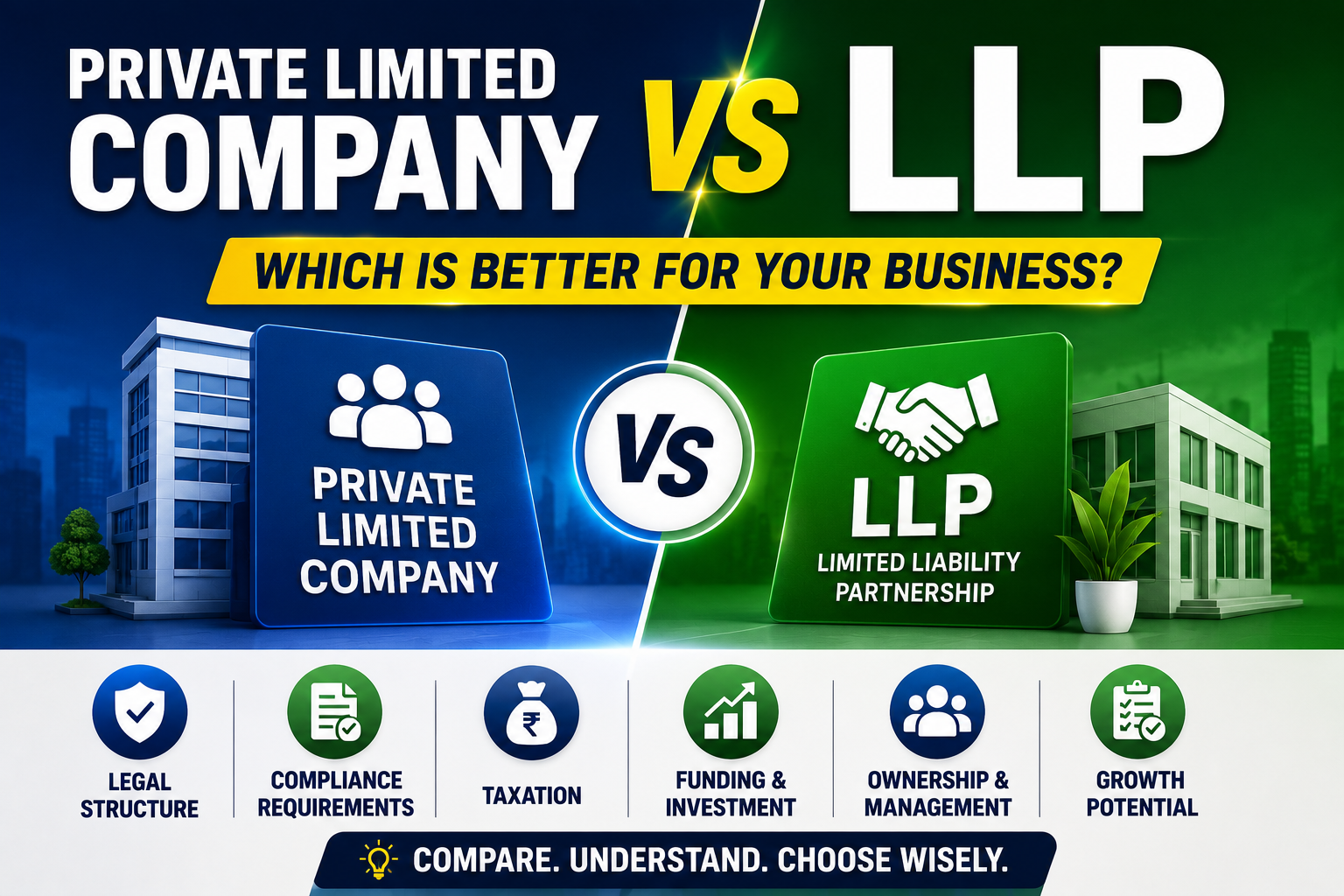
Funding and Investment
One of the most important differences in the LLP vs Private Limited Company comparison is the ability to attract investment.
Private Limited Companies are preferred by investors because they can issue shares and provide structured ownership opportunities.
LLPs have limited fundraising options because they cannot issue shares like companies.
Tax Considerations
Both structures have different tax treatments depending on applicable laws and business income. Entrepreneurs should evaluate taxation based on their business activities, revenue expectations, and future plans.
Professional advice can help determine the most suitable structure from a tax planning perspective.
Business Credibility
A Private Limited Company often enjoys stronger credibility among investors, banks, and larger clients because of its structured corporate framework.
An LLP also provides professional recognition and is trusted by many service-based businesses.
Benefits of an LLP
LLPs offer several benefits for entrepreneurs who prefer flexibility and cost-effective operations.
Cost-Effective Maintenance
The lower compliance burden makes LLPs more affordable for small businesses and professionals.
Operational Freedom
Partners can create customized agreements that define responsibilities, decision-making powers, and profit-sharing methods.
Protection of Personal Assets
Limited liability helps reduce personal financial risk associated with business operations.
Ideal for Professional Businesses
LLPs are suitable for businesses such as consulting firms, legal practices, accounting services, and other professional ventures.
Benefits of a Private Limited Company
Private Limited Companies provide advantages for businesses planning growth and expansion.
Better Fundraising Opportunities
Companies can attract investors by issuing shares, making them suitable for startups seeking external funding.
Improved Market Reputation
A corporate structure can increase trust among customers, suppliers, and financial institutions.
Scalability and Expansion
Private Limited Companies are better suited for businesses planning large-scale operations, partnerships, and expansion.
Employee Benefits
Companies can offer ESOPs, helping attract skilled employees and encourage long-term commitment.
How to Choose the Right Business Structure?
The right choice depends on your business model, financial goals, and future plans.
An LLP may be suitable if:
- You operate a small or professional business
- You want fewer compliance requirements
- You do not need significant outside investment
- You prefer flexible management
A Private Limited Company may be suitable if:
- You plan to raise investment
- You want rapid growth
- You need stronger business credibility
- You want easy ownership transfer
Conclusion
The decision between LLP and Private Limited Company depends on your business requirements, growth plans, and financial objectives. Both structures provide limited liability protection and separate legal identity, but they serve different purposes.
An LLP is a practical choice for professionals and small businesses that value flexibility, lower compliance, and simple management. A Private Limited Company is better suited for startups and businesses that aim to attract investors, expand operations, and build a strong market presence.
By understanding the features and benefits of each structure, entrepreneurs can make a well-informed decision and create a strong foundation for future business success.